When the Judge’s children appeared and argued before him in Court.
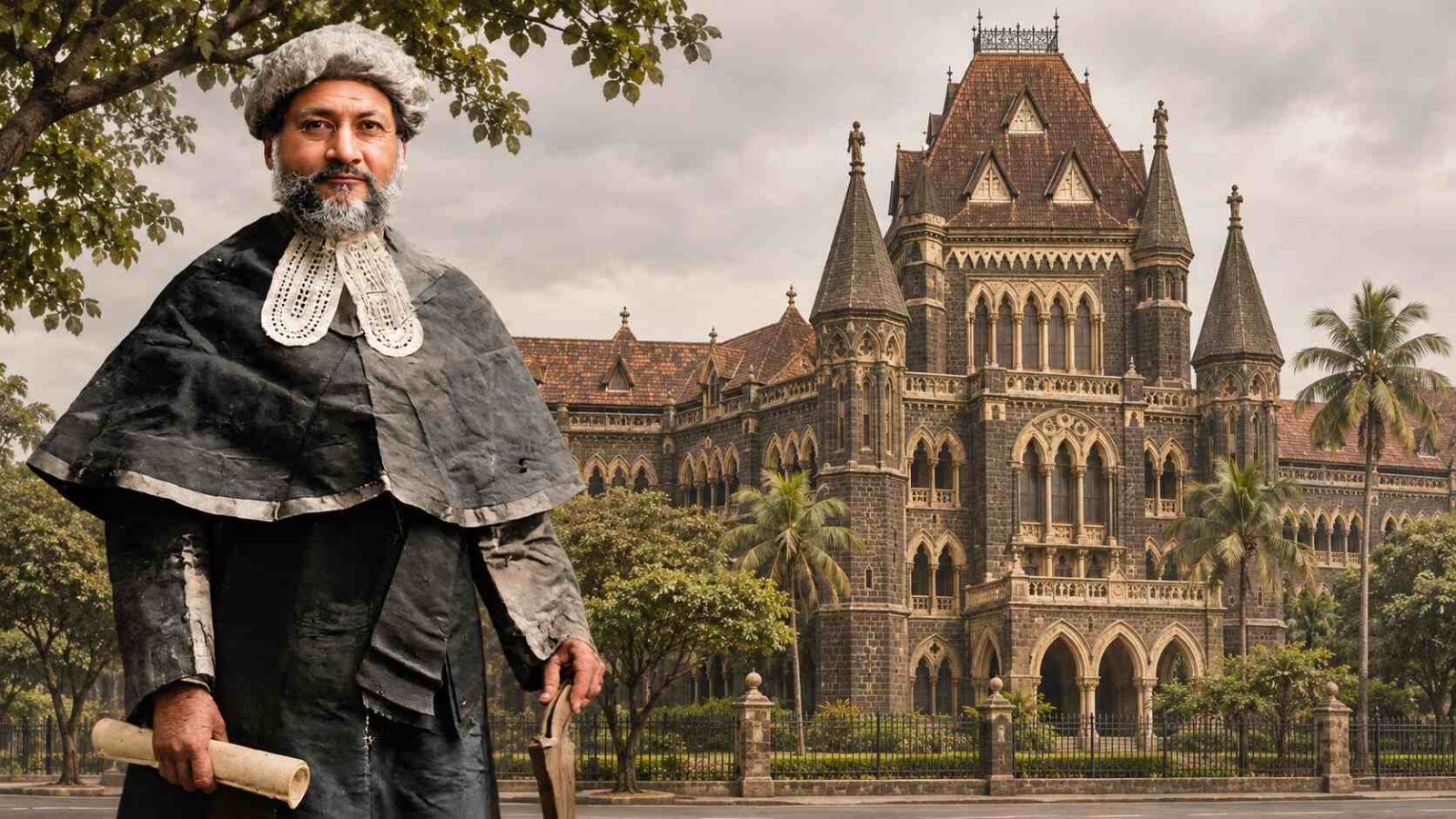
The Supreme Court of India in its recent judgment in Ku. Kiran vs Sudhir Shikshan Sanstha and others, SLP 16636 of 2025 recalls an incident involving Justice Badruddin Tyabji.
Paragraph 42 reads thus: "The law on bias has never been static. As noted hereinabove, it is always evolving. An illuminating anecdote10 in this regard concerns Justice Badruddin Tyabji, the first Indian barrister in Bombay, who became a Judge of the Bombay High Court in 1895 and acted as the Chief Justice in 1902, being the first Indian to be conferred that honour. Justice Tyabji decided cases fairly and honourably. Two of his sons were members of the Bar. In every case that came before Justic Tyabji, solicitors in Bombay would brief the two sons on behalf of their respective clients, so that one appeared for the plaintiff and the other for the defendant. They lived together. They dined together.
The gossip was that they discussed their cases
This was brought to the notice of Chief Justice Sir Lawrence Jenkins, who sent message to Justice Tyabji, asking whether it was appropriate for the two sons to appear in their father’s Court.
Tyabji thundered, ‘Go and tell the Chief Justice to mind his own business.
The matter rested there and that Justice Tyabji continued to decide cases, favouring neither side."
However, the Supreme Court in Ku Kiran case says that "although the incident involving Justice Badruddin Tyabji’s shows that kinship was at one time not treated as a disqualification for a judge, it is now well established that kinship does disqualify wherever it is close enough to give rise to a ‘reasonable likelihood of bias’.''
We have come a long way. Today, allegations of bias against judges sometimes go so far as to question whether a judge can hear a case simply because the judge and a party or counsel come from the same town or district. A shared hometown, without more, tells us little about whether there is a reasonable likelihood of bias.
The Supreme Court’s reference to Justice Tyabji illustrates how expectations of judicial impartiality have changed. A judge may decide a case with complete fairness, yet the circumstances in which it is heard may give a fair-minded and informed observer reasonable grounds to apprehend bias. The law therefore takes appearances seriously, even where actual prejudice cannot be shown.
The same objective test also guards against unfounded allegations. The nature of the relationship, its closeness and its connection to the proceedings all matter. In Ku. Kiran, the concern arose because close relatives occupied several roles in the same disciplinary process, including those of complainant, key witness and adjudicator. Their roles gave the concern a concrete basis.
Public confidence in the judiciary depends on taking well-founded objections seriously. It also depends on judging allegations of bias by the facts of each case. The question is whether those facts give a fair-minded and informed observer an objectively reasonable basis to doubt the impartiality of the decision-maker.
In the age of social media, allegations of judicial bias are made every day. Judges should remain undeterred by unsupported accusations and continue to decide cases with independence and according to law. A substantiated objection deserves careful consideration, but the frequency or volume of an allegation gives it no greater weight. We have confidence in our judicial system, and that confidence should be enough to let judges do their work without feeling obliged to answer every accusation made.