Hindu Succession Act. Property inherited by children as Class I heirs of a male Hindu dying intestate is held by them in their individual capacity and does not become coparcenary property in relation to their own children. Consequently, grandchildren do not acquire right by birth in such property and cannot seek partition. Supreme Court.
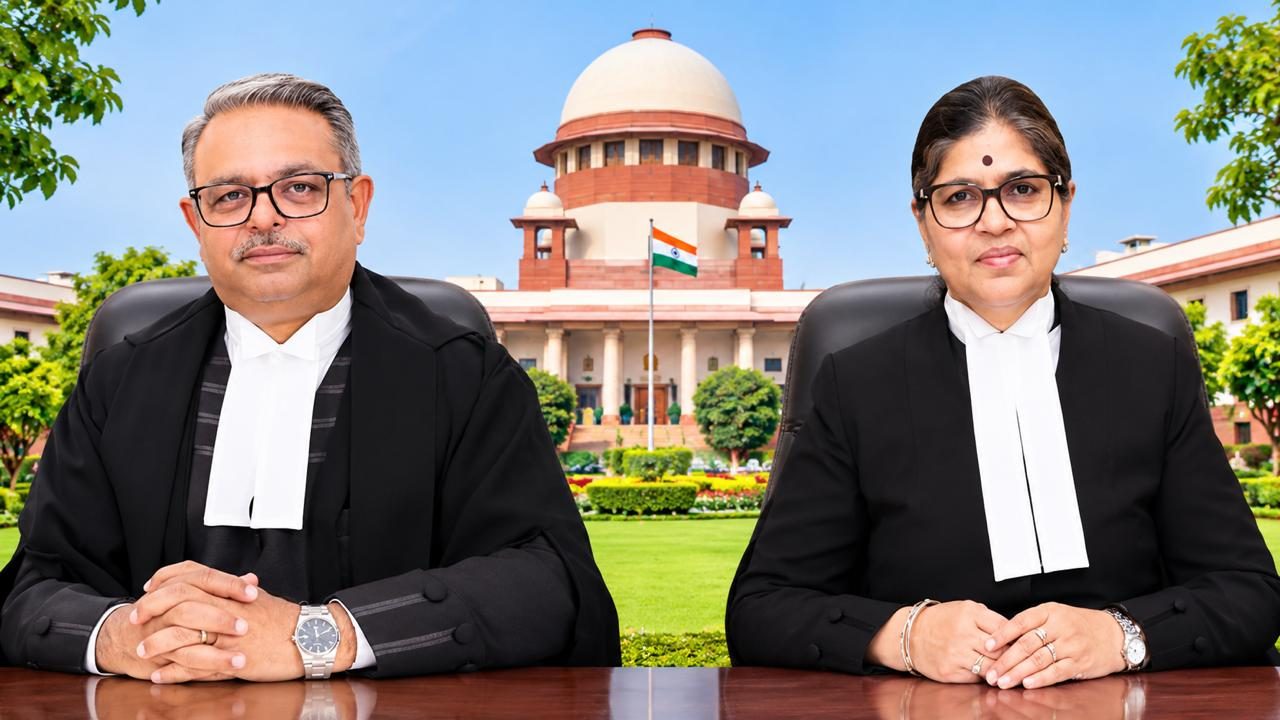
Supreme Court of India
J. Rajesh (Minor) through his Mother and Natural Guardian J. Gomathi v. M. Kumaran (Dead) through LRs & Others
Civil Appeal No. 7020 of 2012
Decided on 6 November 2026
Justice Augustine George Masih
Justice Sunita Agarwal
IMPORTAN PARAGRAPHS 31, 34, 35, 39,
SUMMARY AI generated. Ratio Decidendi / Legal Principles
1. Property received on partition: When a son receives property in an earlier partition in his individual capacity, he becomes its absolute owner and can deal with it independently.
2. No automatic birthright: A son or grandson does not automatically acquire coparcenary rights by birth in property that has devolved upon his father under Section 8 of the Hindu Succession Act, 1956.
3. Section 8 – Succession: Property inherited by a person under Section 8 devolves upon him in his individual capacity and does not automatically become coparcenary property in the hands of his descendants.
4. Effect of partition: Once a partition has taken place and the respective shares have been allotted to the heirs, the joint coparcenary status does not automatically continue in respect of those separately allotted properties.
5. Right to alienate property: A person who becomes the absolute owner of property through partition is entitled to sell or otherwise transfer that property, subject to applicable law.
6. No higher right than the father: A grandson cannot claim a greater right in the property than the right legally available to his father.
7. Unchallenged partition and sale deeds: Where the earlier compromise decree and subsequent sale deeds have not been challenged, a subsequent partition suit cannot simply proceed as though those transactions never took place.
HELD-A son or grandson cannot claim coparcenary rights by birth in property that has devolved upon his father in his individual capacity under Section 8 of the Hindu Succession Act, 1956.