''He had been fighting for a legitimate cause, but veered into a wrong path under emotional distress.'' Supreme Court while disposing Mr. Yatin Oza plea
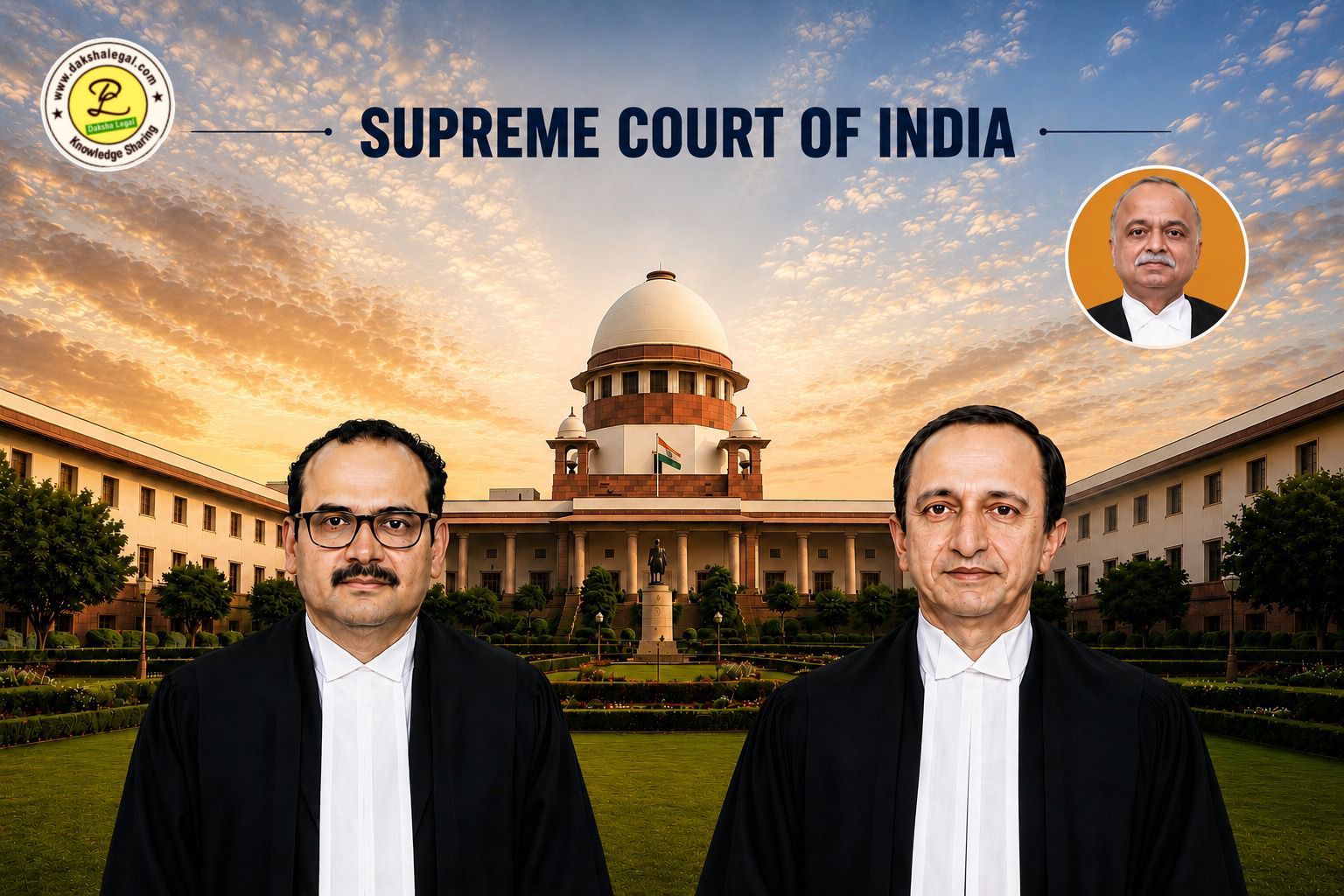
Though the Hon'ble Supreme Court did not interfere with the Order of the Hon'ble Gujarat High Court which convicted Mr. Yatin Oza Senior Advocate and President of the Advocates Association, the Court did take note of the bonafides of Mr. Yatin Oza in making few comments. At paragraph 44 of the judgment, the Supreme Court observes;
44. From the above, it is gathered that undeniably the Appellant had been fighting for a legitimate cause, however, in his pursuit to champion the cause, especially as the President of the GHCAA, he appears to have veered into a wrong path under what appears to be emotional distress. Certainly, COVID-19 was such an unprecedented period in our lives where there was great global disruption, human behaviour was disoriented in a somewhat ‘survivalist’ overload due to the immense pressure of survival. In such circumstances, we are also aware of the immense pressure that the Appellant must have been under, from all quarters of the Bar.
However, the Supreme Court hastens to add that
“While we acknowledge the inherent human tendency to be swayed by emotional impulses fumed by the conviction to defend a cause, such cause must not come at the cost of the dignity of the institution, more particularly, when the allegations have the tendency to disrupt the public faith in the justice delivery system as a whole. The Appellant must realize that as a Senior Advocate, he assumes a heightened duty to exercise restraint and uphold the absolute dignity of all Courts, including the High Court, which stands as the highest judicial institution of the State. The public at large might ascribe great weight to his words and statements made by him may ultimately affect the perception in the minds of the litigants about our justice delivery system, especially so when it has also come on record that the Appellant ensured that his statements are widely reported and publicized. We must caution that a leader of the Bar cannot afford to let emotional volatility dictate his actions. Therefore, such conduct is unacceptable, especially in matters concerning the majesty and authority of the Court and even severe emotional distress cannot be used as an excuse to seek pardon for such conduct.”
The allegations made by Mr. Yatin Oza cannot be completely without any substance. The Supreme Court's observations at the beginning of paragraph 44 are in the light of the following allegations of Mr. Yatin Oza.
A group of 40 advocates came to meet me yesterday. Most of them were juniors. They specifically came to see me not only with a grievance that their matters are not being circulated for number of weeks (which they have accepted now), but to draw my attention to the fact that how matters of billionaires are circulated in no time. They not only expressed their anguish, but frustration and depression too.
2. At least 100 advocates (reserved figure) in last three days, have either approached me or the Secretary General making a serious grievance and complaint that their matters even though filed in a single PDF, for fortnight have not been listed despite of their sincere attempts and efforts. The Registry, it appears, is held bend determined to fall prey to nepotism and favoritism. I will only give one example. A wife filed a bail application for and on behalf of her husband and a funny objection raised by the Registry was that the sex of the wife is not stated and for this reason, the matter was not circulated for ten days. I can give similar such 100 examples, notwithstanding your Lordship's clear instructions not to raise any objection other than vakalatnama and affidavit and circulate the matter upon an undertaking of an advocate, for days and months the Registry does not circulate the matters.
5. I am prepared to come to your Lordship to show the miseries and sufferings of the advocates by their communication either by way of text messages or whatsapp messages and I am prepared to show your Lordship all the messages to appreciate the heart burning of the advocates.
6. Now let me show to your goodself why the heartburnings, depression and frustration. I have annexed for your Lordship's perusal the case status reports downloaded from the official website of the High Court. As per the case status, which has been downloaded from the website of the High Court, one Mr. Areez Khambhata filed a petition on 29th May, 2020. Everyone knows who is Mr. Areez Khambhata. He walks away with the order on 3rd of June, 2020………
7. With a view to not make this letter lengthy I request yourLordship to give me an appropriate time suitable to your Lordship, wherein I will be further able to show five more cases graver than this, wherein the matters have been circulated in 24 hours or preponed without any note or CA. However, for your Lordship's perusal, I have annexed the details of all the five cases. Three of them are of smugglers (according to the Government of India) and two are by top industrial houses.
8. Notwithstanding juniors and non-VIP client making desperate efforts to get the matters registered by sending personal messages to the Deputy Registrar, nothing has been done in their matters. Nobody attends their phone calls. Nobody attends the helpline numbers and bar is now on the verge of frustration and depression. A very clear, unequivocal and certain message is being sent that certain Advocates get top most priority in getting their matters filed and circulated and there cannot be better example than what has been stated above. Depression and frustration have gone beyond limit amongst the advocates……”
I personally feel its the responsibility of an office bearer to protect the interest of the advocates, especially the junior advocates. It injustice is done in the matter of listing by the registry, the President of the Advocates Association or the Bar Council Member/Chairman must certainly react or make representation.
However, attacking the entire judicial system on such issues is totally wrong and uncalled for. This is where Mr. Yatin Oza crossed the line.
Basavaraj S. Senior Advocate and Member, Karnataka State Bar Council
Case: Yatin Narendra Oza v. Suo Motu, High Court of Gujarat and Another
Court: Supreme Court of India
Case No.: Criminal Appeal No. 669 of 2020
Date of Judgment: 2026
Justice J K Maheshwari.
Justice Atul S Chandurkar.
Brief Summary
The Supreme Court considered the validity of the conviction of Senior Advocate Yatin Narendra Oza for criminal contempt arising from a press conference held during the COVID-19 pandemic, wherein he described the Gujarat High Court as a “gambling den” and alleged favouritism in listing of cases. The Gujarat High Court had convicted him for criminal contempt under Section 2(c)(i) of the Contempt of Courts Act, 1971 and sentenced him till the rising of the Court with a fine of ?2,000.
The Supreme Court noted that the remarks were highly improper and scandalous, undermining public confidence in the judiciary. However, the Court also considered mitigating circumstances, including the extraordinary stress during the COVID-19 period, the grievances of junior advocates regarding listing of matters, the appellant’s repeated unconditional apologies, and the fact that he had already suffered deprivation of his Senior Advocate designation for a substantial period.
The Court observed that while contempt proceedings and withdrawal of Senior Advocate designation are distinct, the consequences already suffered by the appellant could not be ignored. The judgment extensively discussed the dignity of courts, the responsibilities of senior advocates, the relationship between the Bar and the Bench, and the importance of preserving public confidence in judicial institutions.
CONCLUSION OF THE COURT.
65 In the interest of comprehension and easy understanding, we are summarizing our conclusion as follows:
(i) The reasons assigned in the impugned order by the High Court do not warrant any interference by this Court, yet, extending a final act of forgiveness, we are inclined to exercise our plenary powers under Article 142 of the Constitution of India to suspend / keep in abeyance the conviction as well as sentence of the Appellant as a consequence of this judgment, indefinitely.
(ii) In the meanwhile, no disqualification or disadvantage arising out of the Appellant’s conviction under the 1971 Act shall attract, including but not limited to disqualification under Section 24-A of the Advocates Act, 1961.
(iii) The Full Court of the High Court shall undertake periodic review of the Appellant’s conduct at an interval of every two years in light of the undertaking of the Appellant quoted in paragraph 50 of this judgment. If the Appellant is found to have carried out any further act of similar nature, the High Court shall be at liberty to file an application in the instant disposed of appeal seeking to give immediate effect to the Appellant’s conviction and sentence as directed by the High Court in the present proceedings.
(iv) Lastly, we request the High Court to take a fresh decision in respect of the incident of 2024 and the question of withdrawal of senior designation, in light of the present judgment, completely uninfluenced by the Appellant’s conviction for contempt by the High Court in the impugned judgment. Needless to say, the decision of retaining / withdrawing the Appellant’s senior gown can also be made a subject of the periodic review every two years which we have directed above.
66. We hope and expect that the Appellant’s conduct remains above board and that he realizes that this final act of forgiveness is in consideration of his undertaking before this Court and he must therefore continue to abide by it in true sense and spirit.