One Twenty Days deadline to file Written Statement. Constitutional validity of Section 4 of the Code of Civil Procedure (Karnataka Amendment) Act, 2024 challenged before the Karnataka High Court.
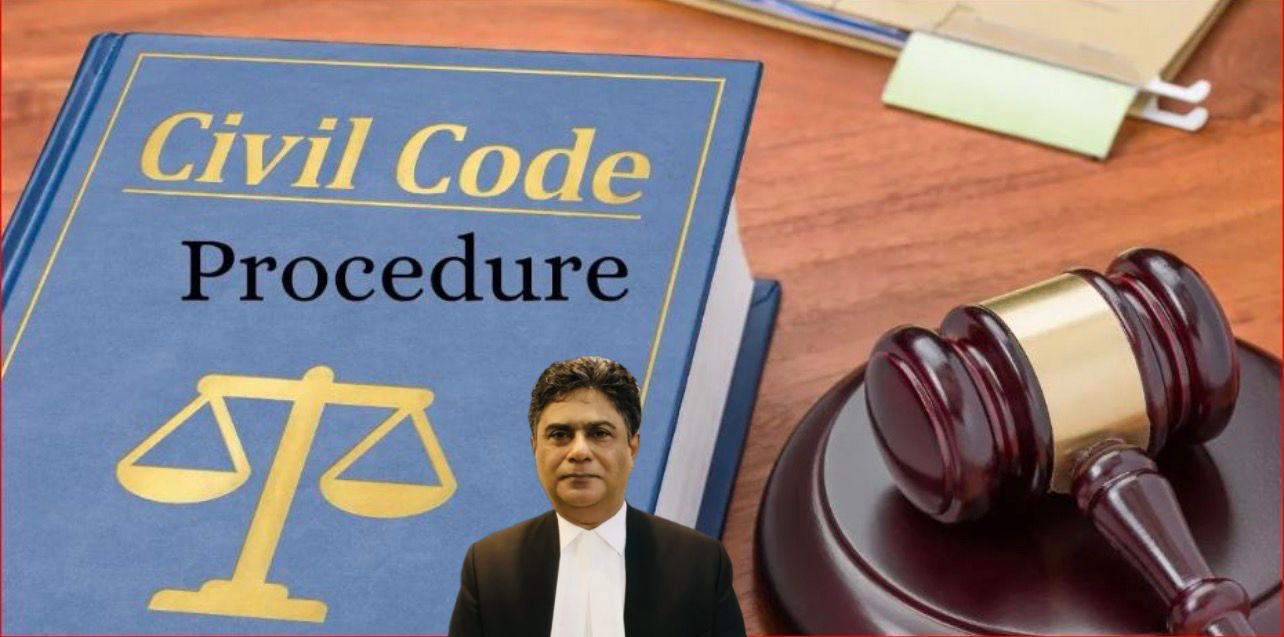
Basavaraj S vs State of Karnataka
Writ Petition FR 8038/2026
The constitutional validity of Section 4 of the Code of Civil Procedure (Karnataka Amendment) Act, 2024 in so far it introduces third proviso to Order V Rule 1 of the Code of Civil Procedure 1908 (Central Act 5 of 1908), as is challenged before the Karnataka High Court. Writ Petition ....of 2026.
Mr. Basavaraj S, Senior Advocate and Member, Karnataka State Bar Council has filed the Writ Petition through Mr. Uday Shankar Advocate challenging the impugned provision.
The offending provision is the proviso to Section 4 which reads
“Provided also that where the defendant fails to file the Written Statement within the said period of thirty days, he shall be allowed to file the Written Statement on such other day, as may be specified by the Court, for reasons to be recorded in writing and on payment of such costs as the Court deems fit, but which shall not be later than one hundred twenty days from the date of service of summons and on expiry of one hundred twenty days from the date of service of summons, the defendant shall forfeit the right to file the Written Statement and the Court shall not allow the Written Statement to be taken on record.”
The impugned proviso, according to the petitioner is manifestly arbitrary and strikes at the very root of dispensation of justice.
The grounds urged in the Writ Petition are;
1. The impugned provision is manifestly arbitrary and unreasonable, thereby violating Constitution of India Article 14. The amendment creates an absolute and inflexible bar on filing a written statement beyond 120 days, irrespective of circumstances. The provision fails to account for genuine practical difficulties faced by litigants such as: obtaining revenue records from government offices, securing family trees and genealogical records, collecting certified copies of earlier proceedings, procuring documents from different departments which is absolutely essential in civil litigation especially at the rural scenario.
2. Unlike commercial disputes, the civil litigation is preceded by legal notice or communication which gives raise to the litigation. Original suits are filed followed by immediate altercation regarding boundary disputes, alleged interference with possession, alleged unlawful squatting on the property etc. Government departments themselves often require several months to supply such documents. Penalising a litigant for delays caused by administrative inefficiency of the State is manifestly arbitrary.
3. Right to legal remedy is equally applicable to the defendants in an adversarial litigation. The latest judgment of the Hon'ble Supreme Court in Vishnu Vardhan v. State of U.P., 2025 SCC OnLine SC 1501 reiterates that the right to seek an effective legal remedy for an infringed right is part of the right to life enshrined under Article 21 of the Constitution. The impugned amendment virtually robs of this valuable fundamental right. It places the plaintiff in an advantageous position while placing the defendant in the most vulnerable position.
4. The doctrine of manifest arbitrariness, recognised by the Supreme Court, renders legislation unconstitutional when it is capricious, irrational or disproportionate. Filing a Written Statement is the primary opportunity for a defendant to present his defence. Forfeiture of this right deprives the defendant of the ability to dispute facts, raise legal defences, produce documents, or contest the plaintiff’s claim. The amendment effectively condemns a party unheard, which is contrary to settled principles of procedural fairness. Procedural law cannot be interpreted or enacted in a manner that destroys the right to defend a civil action.
5. The impugned provision violates Article 21 of the Constitution, which guarantees fair, just and reasonable procedure. The Hon'ble Supreme Court has repeatedly held that procedure established by law must be fair and reasonable, not oppressive or arbitrary. An absolute forfeiture of defence, irrespective of circumstances is harsh, disproportionate and procedurally unfair. A civil defendant may lose valuable property rights merely because of procedural rigidity, which is incompatible with constitutional due process.
6. Access to justice is a fundamental component of constitutional governance. The amendment extinguishes the right of defence permanently after 120 days, prevents courts from exercising judicial discretion even in exceptional cases such as serious illness, non-availability of public records, delays caused by government authorities and circumstances beyond the control of the litigant. A law that removes judicial discretion entirely is inherently disproportionate.
7. The Hon'ble Supreme Court has quoted the declaration by Justice Krishna Iyer that procedural Law should be handmaid of justice. Procedural law is meant to advance justice, not defeat it. Civil procedure exists to ensure fair adjudication, facilitate presentation of cases and prevent miscarriage of justice. By completely shutting the door on the defence, the amendment converts a procedural rule into a substantive penalty. Such an approach defeats the very purpose of civil adjudication.
8. The Code of Civil Procedure, 1908 traditionally grants courts flexibility in procedural matters. The CPC contains several provisions allowing courts to enlarge time, condone delay, accept documents later in the interest of justice. The impugned amendment removes this flexibility entirely, thereby disturbing the scheme of procedural justice under the CPC.
9. The impugned amendment treats defendants more harshly than plaintiffs. Plaintiffs may institute suits even with incomplete documents. They may produce documents later with leave of the court. However, defendants are absolutely barred from filing written statements after 120 days. This creates unequal treatment without reasonable justification, offending Article 14 of the Constitution of India.
10. The impugned amendment ignores the ground realities of litigation in India, particularly in states like Karnataka. In civil disputes involving property, a defendant must often collect RTC extracts, mutation records, pahani records, genealogical trees, revenue maps and certified copies of earlier litigation. Obtaining these documents from revenue authorities often takes several months. Thus, the 120-day cap creates practical impossibility, leading to denial of justice.
11. If the right to file written statement is forfeited the court may proceed without considering the defence. Decrees may be passed solely on the basis of the plaintiff’s pleadings. This increases the likelihood of erroneous or unjust decrees. Civil courts exist to determine truth after hearing both sides, not to issue decrees based on procedural default.
12. The amendment eliminates judicial discretion entirely, making the provision excessively rigid. A constitutionally valid procedural law should prescribe timelines for efficiency but still allow limited judicial discretion in exceptional circumstances. The impugned provision strips courts of that power, which undermines the justice delivery system.
The Writ Petition is likely to come up before the Hon'ble Court next week.