Four decades ago: The earliest judicial warning against misuse of PIL jurisdiction.
Basavaraj S, Senior Advocate, Bengaluru.
Recently, in the Sabarimala hearing, the Supreme Court (nine judges bench) once again highlighted a growing judicial concern — the indiscriminate filing and entertaining of Public Interest Litigations (PILs) on every conceivable issue, including matters involving deep religious beliefs and constitutional morality.
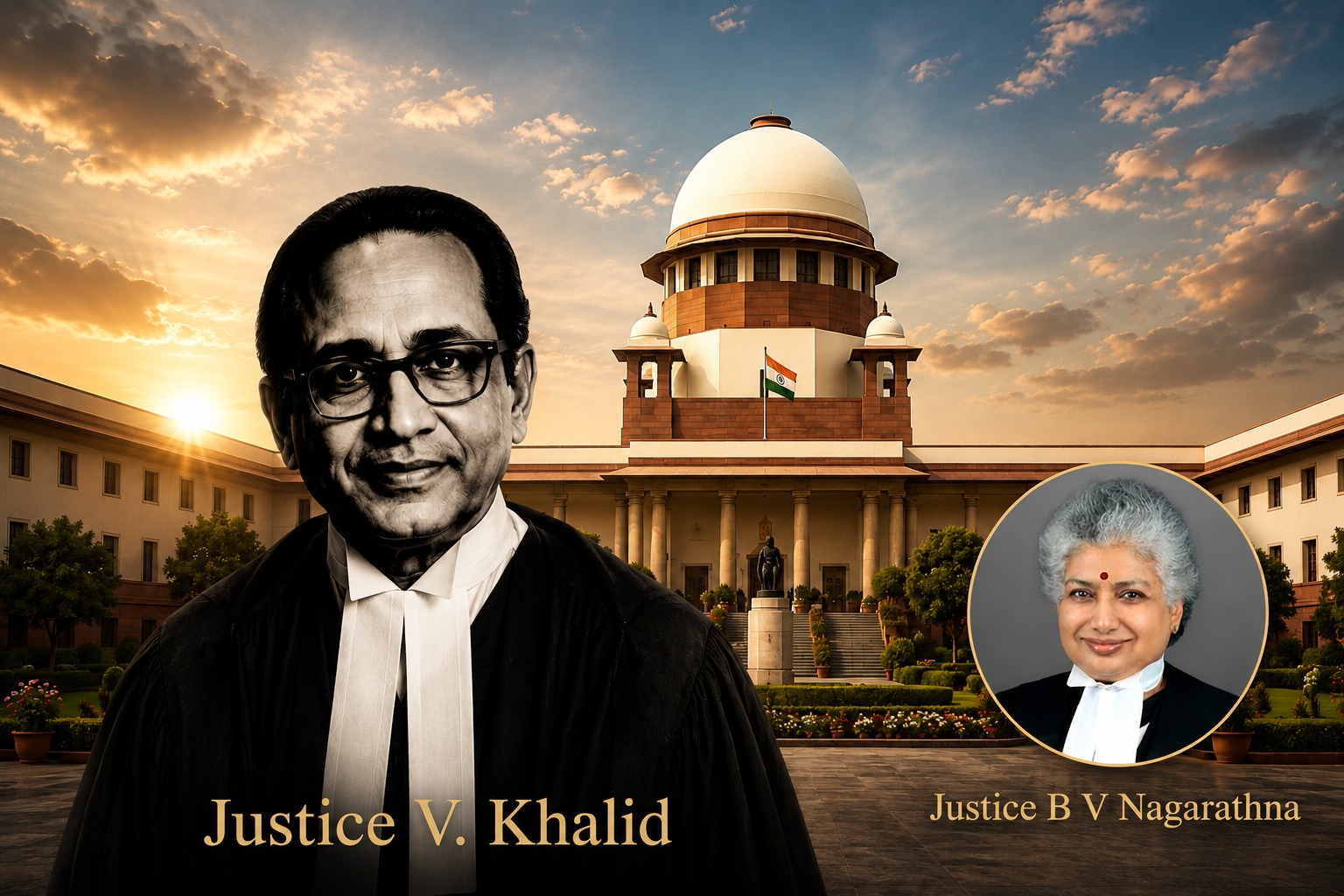
During the proceedings, the Court, especially Justice B V Nagarathna, repeatedly reflected on the broader implications of courts becoming arenas for resolving every social, religious or philosophical disagreement through PILs.
Justice Nagarathna appeared cautious about indiscriminate challenges to religious customs through PILs.
At the same time, Justice Nagarathna also made strong observations supporting women’s dignity and equality. She questioned practices treating menstruating women as temporarily “untouchable,” remarking that women cannot be treated as untouchables for three days every month.
Justice Nagarathna's observations on the role of Advocates fraternity especially a representative body in improving the standards of Advocates especially the junior Advocates were apt. When Justice Nagarathna said "Mind Your Business" it only questioned the bonafides of the petitioner i.e. Advocates group challenging the ban on certain women entry in Sabarimala.
Almost 40 years ago, Justice V. Khalid, former Judge, Supreme Court of India, while writing concurring judgment in Sachidanand Pandey v. State of W.B., (1987) 2 SCC 295 expressed deep concern over misuse of PIL jurisdiction. The relevant portion of his observations are extracted below;
"59. My purpose in adding these few lines of my own is to highlight the need for restraint on the part of the public interest litigants when they move courts. Public interest litigation has now come to stay. But one is led to think that it poses a threat to courts and public alike. Such cases are now filed without any rhyme or reason. It is, therefore, necessary to lay down clear guidelines and to outline the correct parameters for entertainment of such petitions. If courts do not restrict the free flow of such cases in the name of public interest litigations, the traditional litigation will suffer and the courts of law, instead of dispensing justice, will have to take upon themselves administrative and executive functions.
61. It is only when courts are apprised of gross violation of fundamental rights by a group or a class action or when basic human rights are invaded or when there are complaints of such acts as shock the judicial conscience that the courts, especially this Court, should leave aside procedural shackles and hear such petitions and extend its jurisdiction under all available provisions for remedying the hardships and miseries of the needy, the underdog and the neglected. I will be second to none in extending help when such help is required. But this does not mean that the doors of this Court are always open for anyone to walk in. It is necessary to have some self-imposed restraint on public interest litigants.
63. I conclude this short judgment, with a lurking doubt in my mind, and with a question: “Is there something more than what meets the eye in this case".
Today, it is a matter of fact that the Courts are increasingly called upon to adjudicate issues rooted in centuries-old religious practices and denominational beliefs. Excessive judicial intervention risks unsettling delicate balances between constitutional values.
The Court has, in several cases, lamented how PILs are often filed for visibility, ideological projection or political messaging rather than genuine public welfare. Entertaining all forms of PILs burdens constitutional courts and diverts precious judicial time from ordinary litigants awaiting justice for years.
Once courts entertain PILs on sensitive socio-religious questions, similar challenges emerge across multiple faiths and practices. The judiciary then risks being drawn into continuous supervision of religious customs, traditions and social policy matters better left to legislatures or society itself.
Conclusion. The concern ultimately is institutional preservation. If courts begin deciding every moral, religious, cultural and political controversy through PILs, the judiciary risks being perceived not merely as an adjudicator of law, but as a permanent arbiter of society itself.