Client approaches the Supreme Court seeking enhancement of the punishment imposed on her advocate for disclosing privileged information to the press. Supreme Court imposes costs of Rs. 5 lakhs on her after her messages reveal an attempt to ‘fix’ a Police Officer in a rape case.
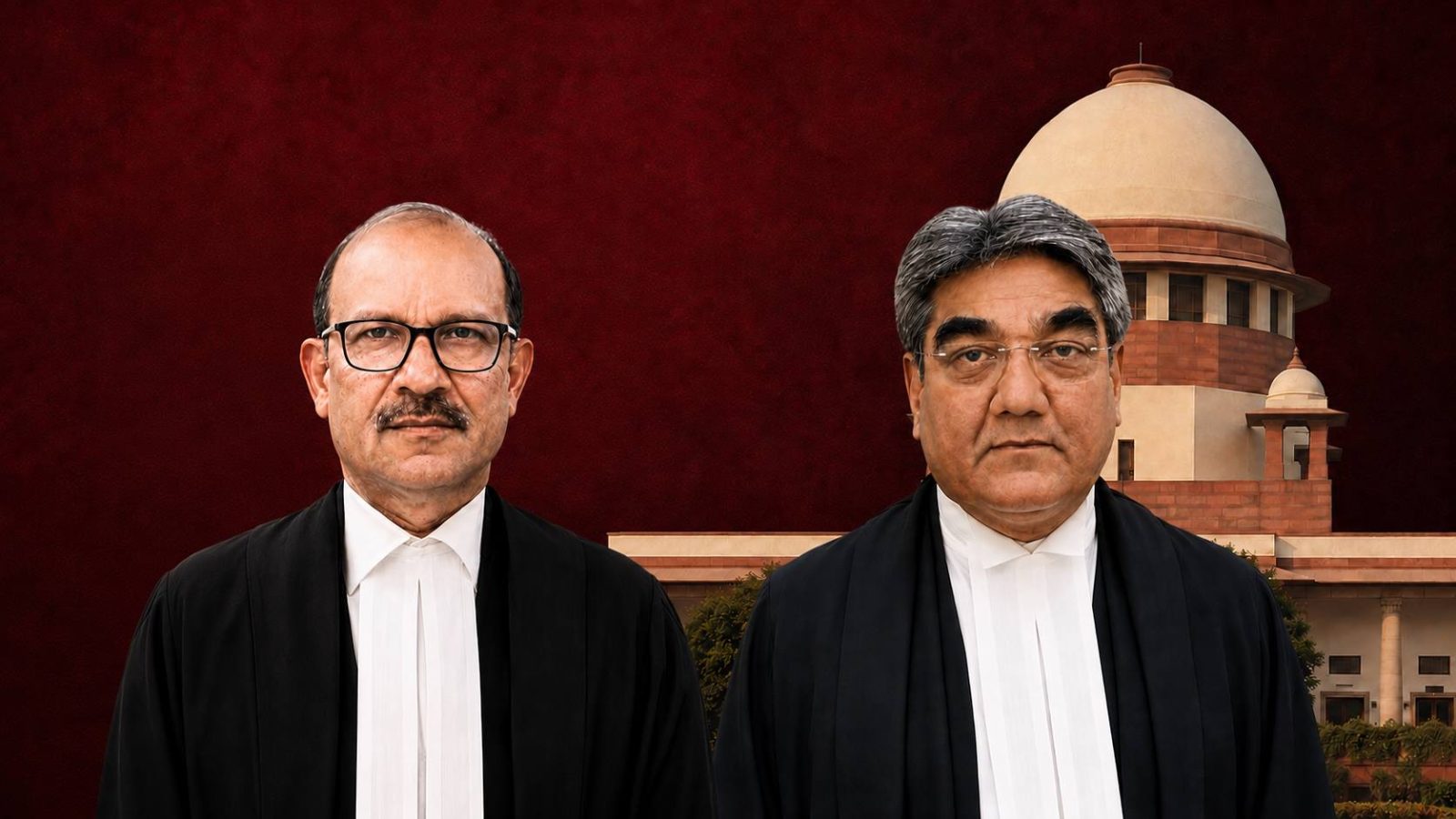
Supreme Court of India
Rehana Khan v. Rizwan Siddiquee
Civil Appeal No. 12256 of 2025, along with Transferred Case (Civil) No. 30 of 2026 and Civil Appeal No. 7959 of 2026
Decided on 21 August 2026
Justice Vikram Nath,
Justice Sandeep Mehta and
Justice Vijay Bishnoi
2026 Daksha Legal SC
IMPORTANT PARAGRAPHS
1. It is sometimes said that in a trial the parties already know the truth, and that it is the judge who is on trial. The observation is a sobering one, and the present case illustrates why. Before us are two litigants, each of whom has approached this Court in the confident expectation of vindication, and neither of whom has been candid with it. Every fact of consequence has had to be prised out of a record in which suppression, embellishment and afterthought are the common currency of both sides. The machinery of justice is not a facility placed at the disposal of parties to settle scores, to salvage reputations they have themselvesimperilled, or to extract advantage from a controversy of their own making. We say at the outset, and give our reasons in what follows, that neither the appellant nor the respondent leaves this Court with credit.
18. An advocate who considers himself falsely accused is not without remedies. He may place his version before the investigating agency, as indeed the respondent did on 4th August 2014 or he may sue in defamation. What he may not do is take his grievance to a television channel and there disclose privileged communications, play recorded conversations with his former client, and describe her complaint as a false case of rape while accusing her of seeking publicity.
20. As regards the appellant's prayers, there is a further difficulty. She asks this Court to enhance a punishment in her favour, and one who asks for that must come to us with clean hands. She has not. The material on record, including exchanges she has herself relied upon, shows that while the engagement subsisted she and the respondent were in discussion about the means by which the police official might be trapped, which is not the conduct of a client simply seeking legal advice. Nor is her account of what followed complete. She appeared before the electronic media on 28th July 2014 of her own volition and spoke of her case, though her grievance before us is that her case was made public. Further, the police official was discharged on 4th December 2015, and that order has never been challenged by her. Having been less than candid about each of these matters, she cannot ask us to enlarge a relief granted to her. Her prayer for enhancement is refused and Civil Appeal No. 12256 of 2025 is dismissed.
21. We are left with the observation with which we began. Each of these parties has come to us complaining of a wrong, and each has been the author of a good part of it. Between them they have occupied the time of the Bar Council of India, a High Court and this Court for eleven
years. That time belonged to other litigants, waiting for reliefs they genuinely need. We record our strong disapproval of the conduct of both.
23. In view of the conduct of each party, we find it fit to impose costs. The appellant and the respondent shall each pay costs of Rs. 5,00,000/- (Rupees Five Lakhs only) to be deposited with the Supreme Court Legal Services Committee within four weeks from today, failing which it shall be recovered in accordance to law.
SUMMARY AI generated. Ratio Decidendi / Legal Principles
1.Advocate-client confidentiality continues to bind an advocate even after termination of the professional relationship.
2.An advocate cannot disclose privileged or confidential communications received from a client in order to defend himself publicly. 3.A client's subsequent conduct or hostility towards the advocate does not extinguish the advocate's professional and ethical duties.
4.An advocate who believes he has been falsely accused must use lawful remedies, such as placing his version before the investigating agency or pursuing a defamation action, rather than publicly revealing confidential client information.
5.A person seeking enhancement of disciplinary relief must approach the Court with clean hands and complete candour.
6.The Supreme Court may decline enhancement where the complainant's own conduct and suppression of material facts make such relief inappropriate.
HELD- An advocate cannot disclose or misuse confidential communications received from a client, even after the professional relationship ends; such disclosure constitutes professional misconduct, but enhancement of punishment may be refused where the complainant herself has not approached the Court with clean hands.