Constitution of Benches, allocation of the work to a particular judge, issue a roster, transfer a case from one judge to another judge, pass orders in respect of transfer of a case from one bench to another bench is the prerogative of the Chief Justice. Karnataka High Court.
As an Amicus Curiae, I had the privilege of assisting the Full Bench of the Karnataka High Court in a matter concerning the powers of the Chief Justice of High Court to allocate the work to a particular judge, issue a roster, transfer a case from one judge to another judge, pass an order in respect of transfer of a case from one Bench to another Bench. This judgment is an authority on the questions involved and answered by the full bench.- S Basavaraj, Senior Advocate.
Karnataka Power Corporation Limited vs Gopalakrishna and others
Writ Petition 7320 of 2017 decided on 6 August 2021.
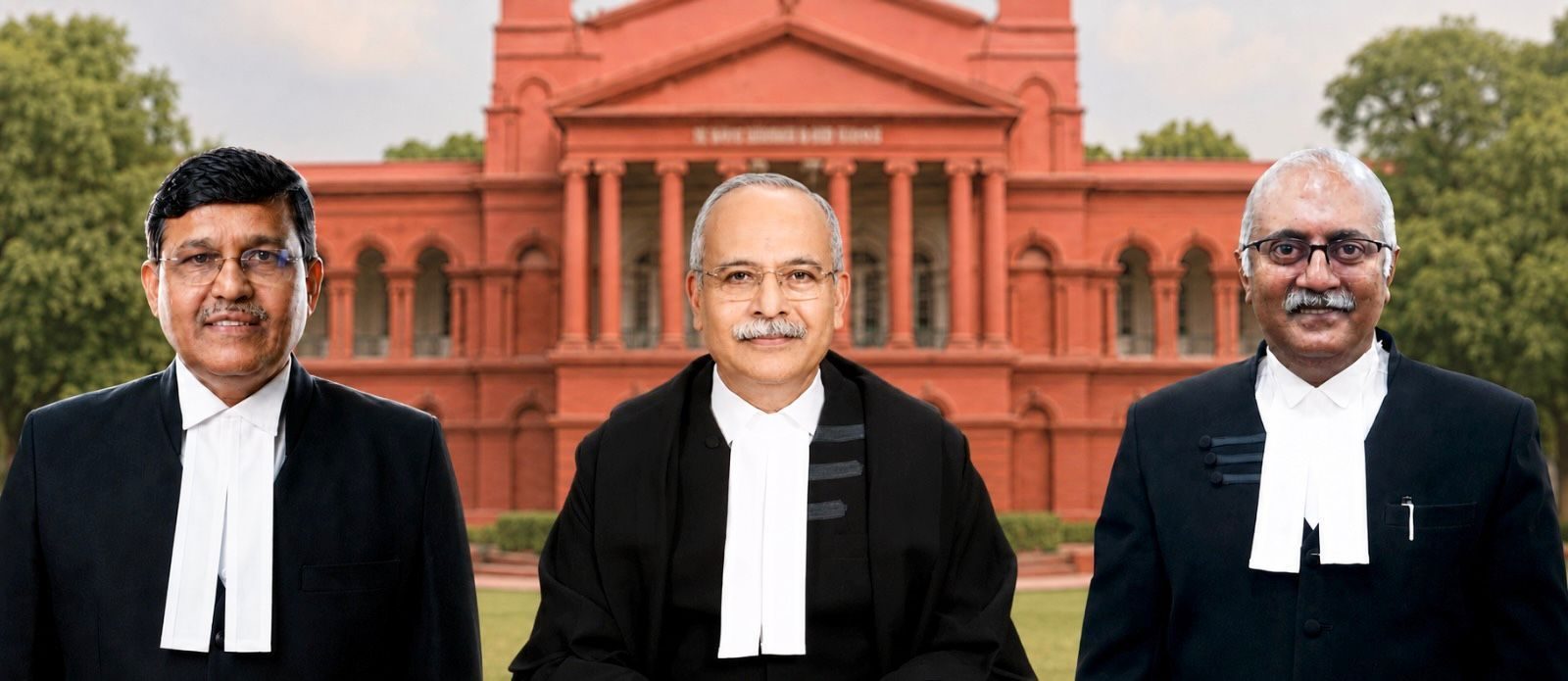
Justice Satish Chandra Sharma, Justice R. Devdas and Justice Sunil Dutt Yadav.
Relevant paragraphs.
11. The territorial jurisdiction of the Benches is well defined. The judgment which has been referred by the learned Single Judge in his order dated 11.2.2021 reveals that the Division Bench of this Court in the case of Abdul Wajid (supra) held that neither the Chief Justice nor the Full Bench of the High Court has the jurisdiction to decide whether any particular Bench in the High Court of Karnataka has the jurisdiction to entertain the writ petition or not and the issue has to be decided in an individual case by the Judge or the Judges hearing the matter and therefore, the High Court Registry cannot raise an objection in respect of the maintainability of a case on the ground of territorial jurisdiction.
12. Learned Amicus Curiae has placed reliance upon a judgment delivered in the case of State of Rajasthan v. Prakash Chand, reported in (1998) 1 SCC 1. Paragraphs 7, 8, 9, 10 and 59 of the judgment reads as under; ....The aforesaid judgment defines the powers of the Chief Justice and the Chief Justice is the master of the roster.
15. The aforesaid Rule makes it very clear that Constitution of Benches and allotment of judicial work/distribution of judicial work has to be done only and only by Hon'ble The Chief Justice. The same view has been expressed by the Hon'ble Supreme Court in the case of State of Rajasthan v. Prakash Chand
16. In the light of the aforesaid, it is crystal clear that it is only Hon'ble The Chief Justice, who can allocate the work to a particular judge, issue a roster, transfer a case from one judge to another judge, pass an order in respect of transfer of a case from one Bench to another Bench and by no stretch of imagination a puisne judge can transfer a case from one Bench to another Bench. Every judge of the High Court does not have the power, whether he is sitting singly or whether it is a Division Bench or whether it is a Full Bench, to transfer a case from one Bench to another Bench or from main Seat to Benches or vice versa.
18. It is a settled proposition of law that "forum convenience" is not a fundamental right similar to 'access to justice'. 'Access to Justice' is recognized as a fundamental right (see Manohar Joshi v. State of Maharashtra, reported in (2012) 3 SCC 619; Roger Mathew v. South Indian Bank Limited, reported in 2020 6 SCC 1). However, 'forum convenience' cannot be claimed as fundamental right and the right to choose jurisdiction of the court is again subject to the powers of the Chief Justice as discussed above. Forum convenience cannot become 'forum shopping'. The Hon'ble Supreme Court in the case of Ambica Industries v. CCE, reported in (2007) 6 SCC 769, had an occasion to consider similar issue.
19. It may be noted that 'forum convenience' is a double edged sword. It applies to both the petitioner/appellant and respondent. If a litigant from Kalaburagi approaches the Principal Seat at Bengaluru, he drags even the private respondents to the Principal Seat, their inconvenience notwithstanding. There may be cases where the same judgment or order is challenged by both the parties before the High Court. In such an eventuality, if the judgment of this High Court in Abdul Wajid's case (supra) is accepted, one party can file appeal in Kalaburagi Bench and the other at the Principal Seat. Because of this, in the words of the Hon'ble Supreme Court, "some sort of judicial anarchy shall come into play".
20. In the considered opinion of this Court, merely because it was convenient for the petitioner to file a petition at the Principal Seat the petition at the Principal Seat was not maintainable on account of the territorial jurisdiction, otherwise, people will start forum shopping/forum hunting while filing cases before the Principal Seat or before the Benches keeping in view their comfort level as well as the other factors.
21. Resultantly, this Court is of the opinion that the judgment delivered in the case of Abdul Wajid (supra), deserves to be clarified. Every judge of the High Court, keeping in view the judgment delivered by the Hon'ble Supreme Court in the case of State of Rajasthan v. Prakash Chand (supra), does not enjoy the power to transfer cases from one Bench to another Bench or from Principal Seat to Benches and vice versa.
The law laid down in Abdul Wajid's case (supra), treating each and every judge of the High Court to transfer a case warrants interference. The Registry can always raise an objection regarding the maintainability of a case if it is filed at Principal Seat/Benches not having territorial jurisdiction and the learned Single Judge before whom the matter is placed shall certainly be free to pass an order in respect of jurisdiction keeping in view the notifications relating to jurisdiction in accordance with law. Therefore, in the considered opinion of this Court, Kalaburagi Bench, keeping in view the notifications issued, which have been referred to in earlier part of the order, is having jurisdiction only in respect of Kalaburgi, Bidar, Vijayapura, Raichur and Yadgir and therefore, the office can raise an objection in respect of the jurisdiction and the learned Judge, before whom the matter is placed, shall certainly be free to pass an order in respect of the jurisdiction keeping in view the notifications relating to jurisdiction in accordance with law.
26. The issues are answered accordingly and the matter be placed before the learned Single Judge, Kalaburagi Bench for further orders in accordance with law.
27. This Court also appreciates the assistance provided in the matter by learned counsel Shri S.Basavaraj.